


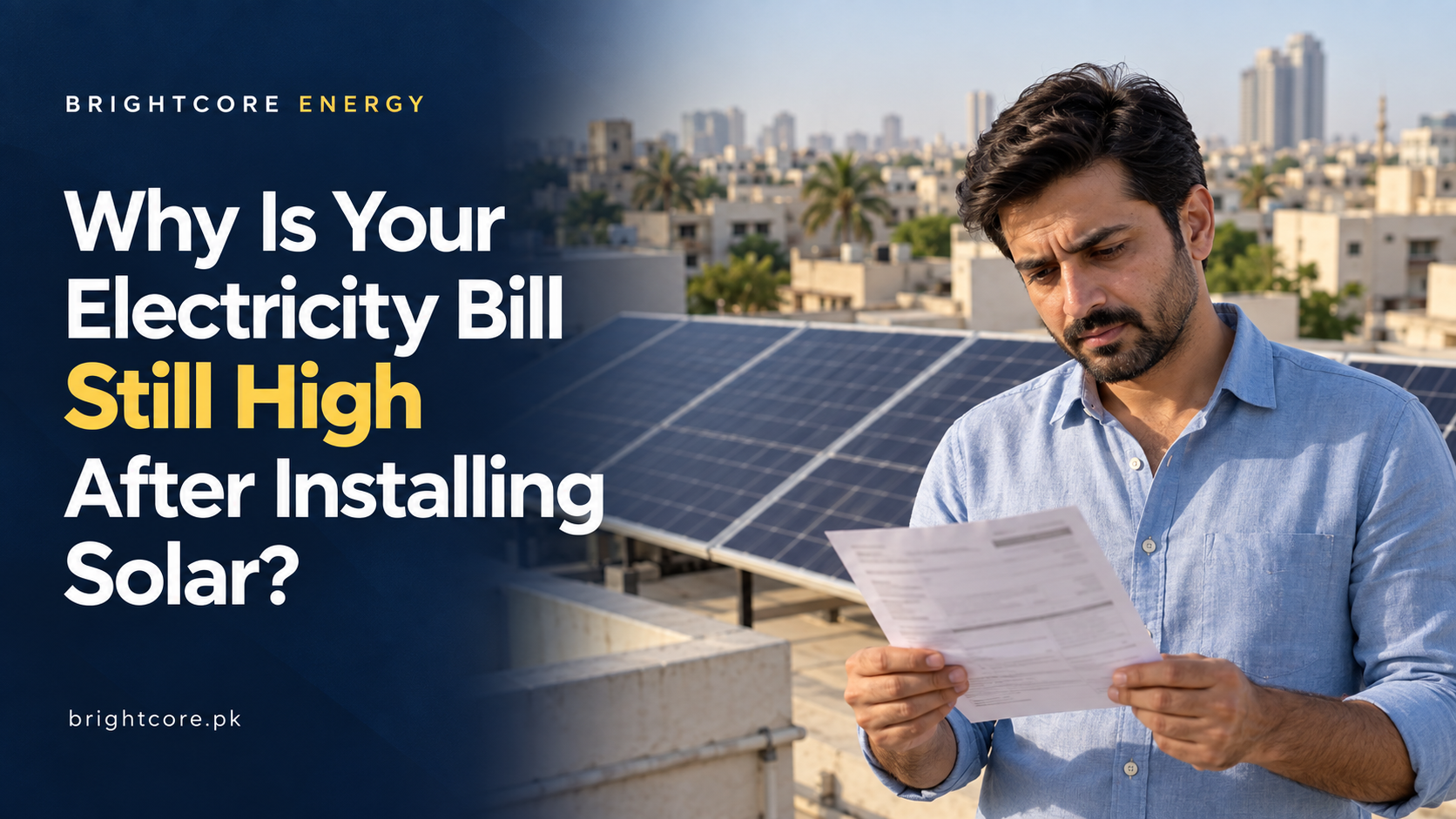
You installed solar panels expecting a noticeable drop in your electricity bill. The inverter is working, the app shows daily generation, and the panels seem fine. But when the next bill arrives, the amount is still higher than you expected.
It is frustrating, especially after investing in a system that was supposed to reduce your monthly expenses.
A high electricity bill after solar does not automatically mean your panels are faulty. Your electricity usage, the timing of that usage, system settings, and the way your utility calculates your bill all affect the result.
Before spending money on more panels or a bigger battery, it helps to understand where the electricity—and your money—is going.
1. Most of your electricity use happens after sunset
Solar panels generate electricity during daylight hours, but your household may use most of its energy in the evening.
Think about a home where everyone leaves for work or school in the morning. Daytime consumption is low. After sunset, the air conditioners switch on, dinner preparation starts, and televisions, lights, and other appliances run together.
Without sufficient stored solar energy, that evening demand is supplied by the grid.
For a simple example, imagine your home uses 30 units of electricity a day, with 20 units consumed after sunset. Even if your panels generate 30 units during the day, you can still import substantial electricity at night. Any daytime exports are credited according to your applicable billing arrangement.
What can help: Move flexible tasks, such as running the washing machine or water pump, into productive solar hours. Check actual generation and appliance demand so you are using available solar power effectively.
2. Your household is using more electricity than before
After installing solar, it is easy to become less careful about electricity consumption.
An AC runs for a few extra hours. Another room gets an air conditioner. The thermostat is set lower because “we have solar now.”
These changes can absorb part of the savings your system produces. Your grid consumption may fall less than expected—or rise if your additional demand is large enough.
Compare your current appliance usage with your routine before installation. Also compare similar seasons: a mild-weather bill before solar and a peak-summer bill after solar are not a fair comparison.
What can help: Review imported units as well as the rupee amount. Look at daily consumption where monitoring is available, and account for changes in weather, occupancy, and appliances.
3. Your system is smaller than your actual energy needs
A solar system should be selected around your electricity demand, available roof space, usage hours, and backup requirements.
The inverter rating alone does not tell you how much electricity the system will generate. A 10kW inverter does not produce 10kW continuously, and its rating does not confirm how much panel capacity is connected.
There is also a difference between kW, which measures power at a particular moment, and kWh, which measures energy over time. One kWh is one electricity unit.
If your home uses more energy than the installed panels can provide, the remaining demand must come from the grid or another source.
What can help: Ask your installer to compare the installed panel capacity and expected monthly generation with your actual consumption. Review the figures before deciding whether an expansion is necessary.
4. Dust, shade, or heat is affecting production
Panels can be operating without delivering their expected output.
Dust buildup, bird droppings, a nearby water tank, or shadows from surrounding buildings can affect generation. Heat also matters: a bright, very hot afternoon does not necessarily produce the highest output. Real-world solar yield is influenced by heat, dirt, and shading.
On a Karachi rooftop, check whether new construction, stored materials, or seasonal changes in the sun’s position have introduced shade that was not present during installation.
What can help: Compare generation across days with similar weather conditions. Arrange suitable cleaning and a professional inspection if output remains below expectations. Cleaning alone will not resolve an electrical fault or a shading problem.
5. Your inverter or battery settings need attention
A hybrid system can operate in different modes, and those settings affect how much electricity it imports.
For example, the battery may be configured to retain a large reserve for outages. Once it reaches that reserve, the system may use grid electricity even though the app still shows battery charge remaining.
Scheduled grid charging can also add to imported units. This may be intentional for backup, but it can surprise an owner who expects the battery to charge only from solar.
What can help: Ask your installer to review the operating mode, charging schedule, minimum battery reserve, and discharge limits. The settings should reflect whether your priority is backup, lower grid consumption, or a balance of both.
6. The battery cannot cover your full nighttime load
A battery stores a limited amount of energy. It does not provide unlimited overnight power simply because it is connected to a solar system.
For illustration, a battery with 5kWh of usable energy could theoretically supply a steady 1kW load for five hours before conversion losses. At a steady 2kW load, that becomes roughly two and a half hours. Actual runtime depends on usable capacity, efficiency, reserve settings, and changing appliance demand.
Air conditioners, pumps, and other heavy loads can use the stored energy much faster than lights and fans.
What can help: Measure the loads you want to run after sunset. Check whether the battery is intended to support essential appliances or a much larger portion of the property.
7. Solar generation and export credits are different things
The generation figure in your inverter app is not the same as the electricity exported to the grid.
Some solar energy is consumed immediately inside your property. Some may charge a battery. Only the surplus available for export reaches the utility meter, subject to the system configuration.
Your savings also depend on how the utility compensates eligible exports. Do not assume each exported unit cancels an imported unit at the same value; the applicable arrangement matters.
What can help: Check your import readings, export readings, connection status, and the credits applied to your account. For Karachi customers, K-Electric places additional net-metering and service information on the back of its bill, so review both pages.
8. The bill includes more than electricity consumption
A lower number of imported units does not always produce an equally large reduction in the total payable amount.
Depending on your account and tariff, the bill may include applicable fixed charges, taxes, adjustments, arrears, or other amounts. K-Electric’s bill guide explains where to find consumption and additional billing details.
The first bill after installation can also be misleading if the billing period includes several weeks before your system started operating.
What can help: Separate current energy charges from other amounts, and compare the meter-reading dates with your installation date.
9. The system is switching off or missing part of the load
An inverter showing a healthy output at noon does not prove that the system operated correctly all day.
Faults, grid voltage issues, or repeated disconnections may interrupt generation. Standard grid-connected solar systems also generally stop supplying power during a grid outage unless suitable backup equipment is installed.
In some installations, only selected circuits are supplied through the hybrid system. Other appliances may continue drawing from the grid, depending on the wiring and configuration.
What can help: Have a qualified installer review fault history, daily generation graphs, monitoring accuracy, and the circuits served by the system. A screenshot of peak output cannot replace a full performance check.
What should you check first?
Before buying additional equipment, gather:
- Your latest bill and a comparable bill from before installation.
- Inverter generation records for the same billing dates.
- Grid import and export readings, where available.
- Battery charging and discharge information.
- Details of any new appliances or longer operating hours.
Together, these records help distinguish a production problem from a consumption, settings, or billing issue.
Get a clearer picture of your solar savings
Solar can reduce your dependence on grid electricity, but the results depend on how well the system matches your property and daily routine.
If your electricity bill is still high after installing solar, start with the evidence. Check what the panels generate, when your property uses electricity, and how the remaining grid consumption is billed. The right solution may be a settings adjustment, maintenance work, or a change in usage habits.
BrightCore Energy provides solar installation, cleaning, and maintenance services for residential, commercial, and industrial properties in Karachi. Contact our team to discuss your system’s performance and arrange an assessment.
Visit brightcore.pk.
